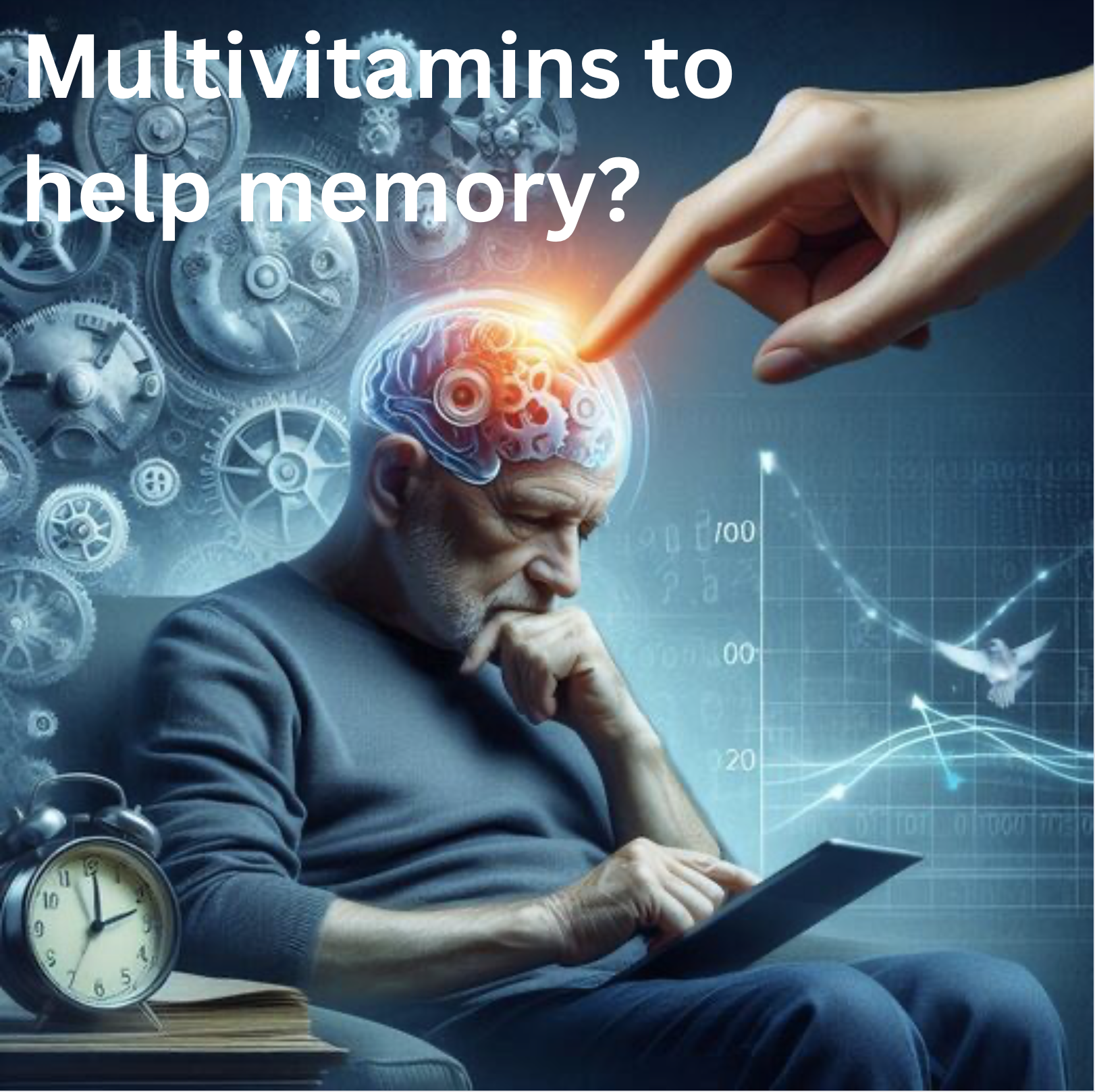
Multivitamins to Help Memory?
Do multivitamins help memory?
by Joe Breault, MD, ScD, MPH on March 21, 2024
Over the past 30+ years of primary care practice, the most common question from patients was whether they should take vitamin pills. Healthy vegetables, fruits, and an exercise program work better than vitamin pills. But sometimes vitamin or mineral pills are needed. Vegans need B12 supplements. Iron deficiency anemia may need iron treatment in addition to finding the cause. Patients on certain medications that interfere with absorption might need specific supplements. Macular degeneration might progress more slowly on AREDS2 vitamins. Occasionally, patients with low vitamin levels on testing might need supplements (not that testing is routinely recommended).
CDC found that one in ten people 45 years and older experience subjective cognitive decline (SCD). Forty one percent of them had to give up some day-to-day activities. One in three say it interfered with social activities, work, or volunteering. Thirty five percent of them need help with household tasks. A group of experts reviewed existing evidence and developed recommendations for primary care clinicians discussing cognitive decline and risk reduction with their patients. They produced 11 consensus-based recommendations. The recommendations included controlling high blood pressure and diabetes, exercise, good sleep, healthy eating, social activity, and cognitive stimulation. It did not include taking any specific pills every day.
Older patients often want a pill to improve memory, asking about Prevagen. It has apoaequor initially found in jellyfish. The FTC and New York State AG have charged the marketers of Prevagen with making false and unsubstantiated claims that the product improves memory, provides cognitive benefits, and is “clinically shown” to work. Among the multiple court cases about Prevagen, a NY jury verdict filed on 3/11/2024 found eight Prevagen claims were not supported with competent and scientific evidence. Two of the eight claims were also found to be materially misleading: “Prevagen reduces memory problems associated with aging” and “Prevagen is clinically shown to reduce memory problems associated with aging.”
I do not recommend Prevagen to my patients. There is concern whether Prevagen is as safe as the manufacturer claims. Wired reports it may not be:
Thousands of Americans have reported experiencing “adverse events” while taking Prevagen, including seizures, strokes, heart arrhythmias, chest pain, and dizziness. While the existence of adverse event reports alone don’t prove a product is the cause, the nature and pattern of complaints about Prevagen worried FDA officials, according to agency records. One internal report from 2015 stated that the “numerous adverse events reported” indicated “a serious safety hazard.”
Overall, for the average person, including older adults, it is better to have lots of vegetables and fruits in the daily diet and a regular exercise program than a multivitamin or supplement pill. Nor did I take a multivitamin myself. That changed when I reviewed the COSMOS trial results. As reported by sciencedirect.com in a Jan 18, 2024 press release:
The COcoa Supplement and Multivitamin Outcomes Study (COSMOS) is a large-scale, nationwide, randomized trial rigorously testing cocoa extract and multivitamin supplements directed by researchers at Mass General Brigham. Two previously published studies of cognition in COSMOS suggested a positive effect for a daily multivitamin. COSMOS researchers now report the results of a third study of cognition in COSMOS, which focused on participants who underwent in-person assessments, together with the results of a combined analysis from the three separate studies. The results from this latest report confirm consistent and statistically significant benefits of a daily multivitamin versus placebo for both memory and global cognition. Results are published today in The American Journal of Clinical Nutrition.
What multivitamin was used in the COSMOS trial? Their trial website (https://cosmostrial.org) states, “The multivitamin tested in COSMOS, Centrum Silver®, is very similar to the current Centrum Silver® Adults 50+ multivitamin which contains a comprehensive array of essential vitamins and minerals to help meet recommended daily intakes.” The trial also found that “there were no safety concerns noted during the COSMOS trial.”
Let’s go over the details of the COSMOS study so you can decide if you should be taking it.
The COSMOS Trial had 21,442 participants, 12,666 women 65 or older and 8,776 men 60 or older. These were followed for an average of 3.6 years through the end of 2020. The trial did not find that multivitamins reduced the risk of total cancer or cardiovascular disease (which is what they were initially focused on) among generally healthy older men and women. Still, it was found that daily multivitamins are safe.
The COSMOS-Mind sub-study enrolled 2,262 COSMOS participants 65 and older who completed annual telephone interviews to assess memory and thinking abilities. It showed that “daily multivitamin use improved cognitive function. That is, participants assigned to the multivitamin group had higher cognitive test scores after 3 years than the participants assigned to the multivitamin-placebo group. The investigators estimated that taking the daily multivitamin slowed cognitive aging by approximately 60%, or the equivalent of 1.8 years over the 3 years of the study...” This effect was most pronounced in participants with a history of cardiovascular disease. Although this is a significant finding, there are limitations. It does not tell us the same results would happen with younger people, so this is an unknown. As substantial as this finding is, most would like more large studies confirming it before it becomes a routine recommendation.
The COSMOS-Web sub-study “enrolled more than 3,500 COSMOS participants who completed web-based assessments (different from those assessed in COSMOS-Mind) to assess memory and thinking abilities annually over 3 years.” It found that “participants assigned to the multivitamin group did significantly better on the COSMOS-Web memory tests at the prespecified primary time point of 1 year. These benefits were maintained across all three years of follow-up. The investigators estimated that the multivitamin intervention improved memory performance by the equivalent of 3.1 years compared to the placebo group.” More details at https://cosmostrial.org/results/
The COSMOS-Clinic sub-study reported in the Science Direct news report at the top of this blog post used in-person, detailed neuropsychological assessments among the 573 participants and conducted a meta-analysis that included the above two COSMOS sub-studies. They concluded: “In COSMOS-Clinic, daily MVM [multivitamin-mineral] supplementation leads to a significantly more favorable 2-y change in episodic memory. The meta-analysis within COSMOS cognitive sub-studies indicates that daily MVM significantly benefits global cognition and episodic memory. These findings within the COSMOS trial support the benefits of a daily MVM in preventing cognitive decline among older adults.” Full details are at https://ajcn.nutrition.org/article/S0002-9165(23)66342-7/fulltext
The Physicians’ Health Study II was an older, large, randomized, double-blind, placebo-controlled study examining multivitamin-mineral supplements and cognitive function. Participants were 5,947 male physicians 65 years or older. The cognitive sub-study started in 1998 with four cognitive telephone assessments over 12 years. No differences were seen between the treatment and placebo groups.
Differences between the COSMOS Trials and PHS II.
The multivitamin-mineral intervention used Centrum Silver in both studies, but in the intervening decades, the formula changed with a few additions. Participants were all older (60-65+) in both studies. The PHS II study participants were physicians, so they were highly educated, had higher socio-economic status, and likely had fewer barriers to healthy eating and a healthy exercise program, which have been shown to help cognitive health. The COSMOS study was for anyone willing to participate who could complete the baseline cognitive assessments (may require telephone, email, and internet/computer access) and did not have insulin-dependent diabetes. The COSMOS study also included women.
Why did the PHS II study show no cognitive benefit to daily multivitamins in older adults, while the COSMOS study did show a benefit? It could be that:
- The physicians in the PHS II study did not have nutritional deficiencies that the general population in COSMOS might have had due to understanding a healthy diet and being able to afford one.
- The diet and food eaten 20+ years ago when the PHS II study occurred were healthier, with fewer dangerous ultra-processed foods that have become ubiquitous in recent years.
- The last few decades since the PHS II study have seen the rise of microplastics and forever chemicals, which might have changed the need for certain nutrients to protect cognitive function.
- The physicians in the PHS II study could have had a better exercise program and social life (both of which delay dementia) than the general population.
- PHS II started cognitive testing, on average, 2.5 years after randomization. As a result, cognitive benefits associated with MVM supplementation over the first few years of follow-up, observed in 3 COSMOS cognitive substudies, might have been missed in PHS II. That is, perhaps the cognitive benefit of a daily multivitamin is in the first few years of use and then levels out. See details at https://ajcn.nutrition.org/article/S0002-9165(23)66342-7/fulltext under discussion.
- Differences may be explained by subtle distinctions in the MVM formulations (Centrum Silver) from PHS II to COSMOS, particularly with the addition of lutein and lycopene for COSMOS.
The USPSTF (US Preventive Services Task Force) sets guidelines for what is medically recommended to prevent problems based on available scientific evidence. Their 2022 statement on Vitamin, Mineral, and Multivitamin Supplementation to Prevent Cardiovascular Disease and Cancer: Preventive Medication said that the current evidence is insufficient to assess the balance of benefits and harms of the use of multivitamin supplements for the prevention of cardiovascular disease or cancer. They did not address the potential benefits of multivitamins for memory or cognitive function.
Conclusions
There was a statistically significant difference in the COSMOS trial, where taking a multivitamin helped cognitive function. So does that mean it is worth taking a Centrum Silver adults 50+ multivitamin and mineral pill daily? Things to consider include...
First, the COSMOS study only included older adults, so the study does not say anything about young adults and cognitive function. This is an unknown. Also, the COSMOS participants had relatively low racial and ethnic diversity, which may limit generalizability even among older adults.
Second, be aware that there is a difference in clinical effect and statistical significance. While the COSMOS trial showed a statistically significant difference in cognitive function when a multivitamin-mineral pill was taken compared to a placebo, how much of a difference in real life was it? According to the study paper, “the magnitude of effect on global cognition appears equivalent to reducing cognitive aging by 2 y.” While this certainly sounds like it is worth it, especially if there is cardiovascular disease, be aware:
- Reducing cognitive aging by two years is an average benefit in the intervention arm of the trial. Benefits are likely a bell curve. Your benefit might be zero or more than two years. The benefit appeared to be greater for adults with cardiovascular disease (self-report of transient ischemic attack, congestive heart failure, coronary artery bypass graft, angioplasty, or stent). The statistical average for the population of the COSMOS participants who took multivitamins does not mean that will be your result.
- One might not notice this difference except through testing scores. In other words, it may not feel like a difference in your life.
- The information we all want is unknown, namely, does it lengthen the time to a diagnosis of dementia, Alzheimer's, or the need for a nursing home?
Third, the study showed taking the daily multivitamin for years was safe, at least for the participants in the COSMOS trial.
Finally, it is always a good idea to consult your physician before starting or changing vitamin-mineral supplements. From a scientific perspective, the COSMOS trial should be considered exploratory, and more studies are needed. The first steps to improve health and prevent cognitive decline should always be a healthy diet, regular exercise, and a social lifestyle that avoids isolation. Yet this is a promising finding that may lead some to action.
The Centrum website notes that this version was “clinically shown to support cognitive health in older adults following selection for the large-scale COSMOS-Mind clinical trial.” It also has the label with the complete list of ingredients:
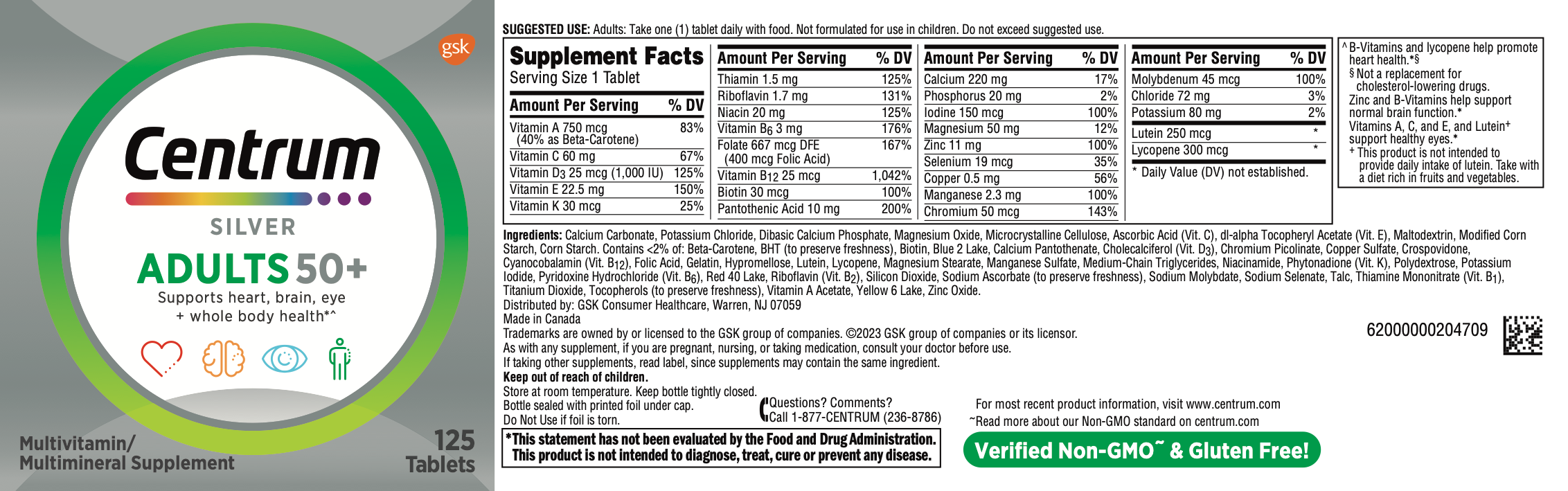
After reading the COSMOS study, I changed my mind and started taking this daily multivitamin. I am similar to the typical COSMOS participant and have decided it is worth taking it daily for me.