Medicare Covers Wegovy®?
Medicare is prohibited from paying for weight-loss treatments. But Wegovy® now has an FDA-approved indication beyond weight loss and can now qualify for payment under Part D. Review of FDA approval, Medicare part D, and the SELECT trial the approval was based on.
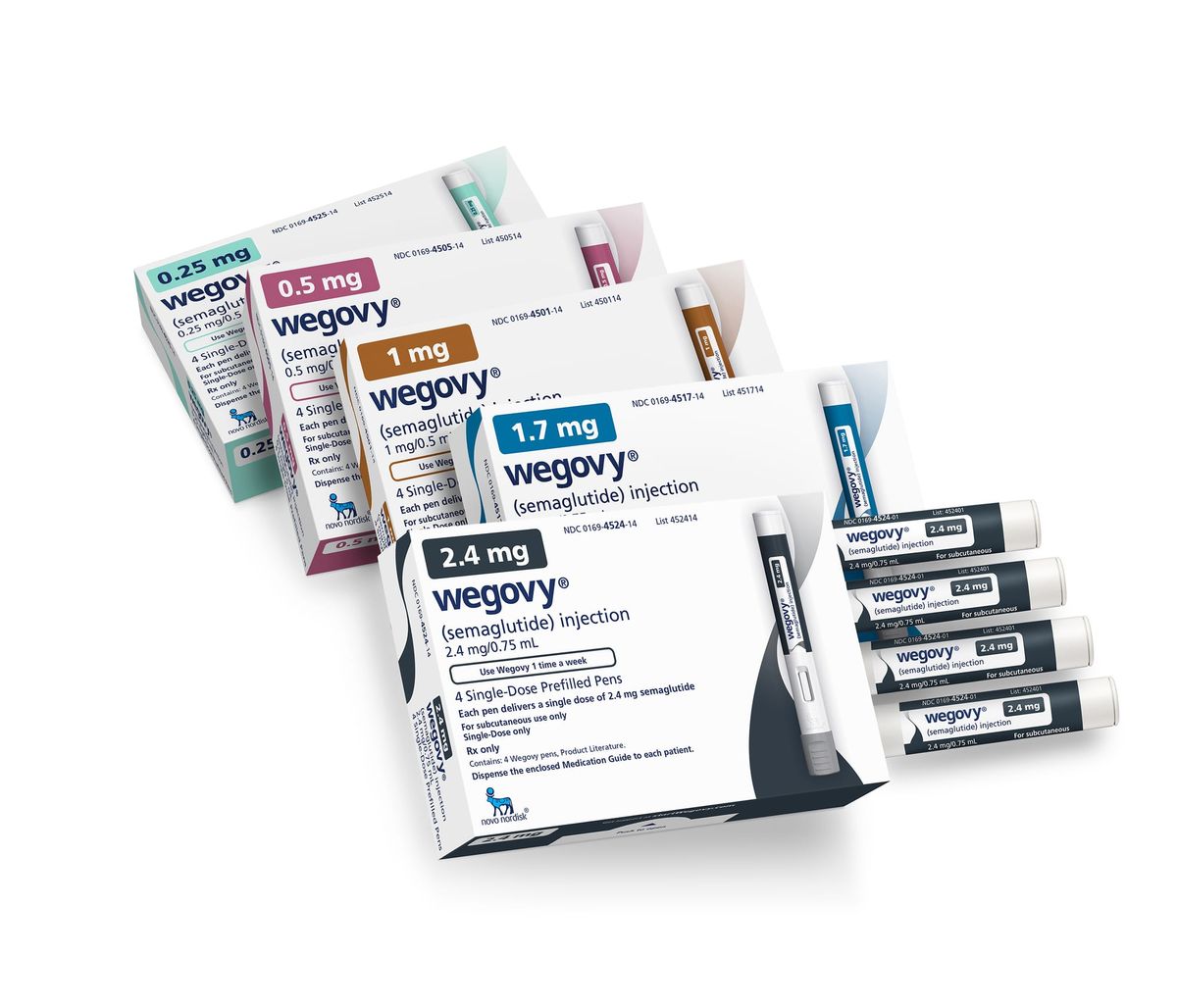
NPR reported that although "Medicare is prohibited from paying for weight-loss treatments," because Wegovy® now has an FDA-approved indication beyond weight loss, it can qualify for payment under Part D.
Let's review
- The FDA approval information
- CMS Medicare Part D coverage
- The study that showed a reduction in time to cardiovascular death, non-fatal heart attack, or non-fatal stroke with Wegovy® use.
Spotify audio podcast of this blog
FDA Approval
The U.S. Food and Drug Administration (FDA) approved Wegovy® on March 8, 2024 "to reduce the risk of major cardiovascular events such as death, heart attack, or stroke in adults with known heart disease and with either obesity or overweight along with a reduced calorie diet and increased physical activity." The FDA press release goes on to say:
“Wegovy is now the first weight loss medication to also be approved to help prevent life-threatening cardiovascular events in adults with cardiovascular disease and either obesity or overweight,” said John Sharretts, M.D., director of the Division of Diabetes, Lipid Disorders, and Obesity in the FDA’s Center for Drug Evaluation and Research. “This patient population has a higher risk of cardiovascular death, heart attack and stroke. Providing a treatment option that is proven to lower this cardiovascular risk is a major advance for public health.”
The FDA information sheet on Wegovy® before this updated approval was only for:
∙∙∙∙∙∙∙∙∙∙∙∙∙∙∙∙∙∙∙∙∙∙∙∙∙∙∙∙∙∙∙∙INDICATIONS AND USAGE∙∙∙∙∙∙∙∙∙∙∙∙∙∙∙∙∙∙∙∙∙∙∙∙∙∙∙∙∙∙∙∙∙∙
WEGOVY is a glucagon-like peptide-1 (GLP-1) receptor agonist indicated as an adjunct to a reduced calorie diet and increased physical activity for chronic weight management in adult patients with an initial body mass index (BMI) of
• 30 kg/m2 or greater (obesity) or
• 27 kg/m2 or greater (overweight) in the presence of at least
one weight-related comorbid condition (e.g., hypertension, type 2 diabetes mellitus, or dyslipidemia).
CMS Medicare Part D Coverage
As reported in the New York Times:
Wegovy has a list price of over $1,300 for about a month’s supply. And doctors typically say patients may need to take these drugs for the rest of their lives. Those cost considerations have led some employers and health plans to stop covering the medications, or to limit access or cap spending amid soaring demand....
The new approval may only drive more demand: One recent study estimated that millions of people in the United States would be eligible for the medication to prevent cardiovascular issues.
A Medicare memo dated March 20, 2024 stated:
CMS is clarifying that AOMs that receive FDA approval for an additional medically accepted indication, as defined by section 1927(k)(6) of the Act, can be considered a Part D drug for that specific use. For example, a glucagon-like peptide 1 (GLP-1) receptor agonist that receives FDA approval for chronic weight management alone would not be considered a Part D drug. If this same drug also receives FDA approval to treat diabetes or reduce the risk of major adverse cardiovascular events (cardiovascular death, non-fatal myocardial infarction, or non-fatal stroke) in adults with established cardiovascular disease and either obesity or overweight, then it would be considered a Part D drug for those specific uses only....
Part D sponsors may consider using prior authorization for these products to ensure they are being used for a medically accepted indication.
Although Part D sponsors could start such coverage immediately, it will likely need to go through committees and have procedures set up, so it might not be till 2025 before coverage beyond diabetes is seen for Wegovy® under Medicare Part D.
There are still too many unknowns to give an estimate of the true out-of-pocket cost. The 2024 system in Part D has the following phases: the deductible, initial coverage, coverage gap, and catastrophic coverage.
- Deductible Phase: You pay full price for the drugs you get under plan D until your deductible is met (varies by plan but maximum in 2024 is $545). The Plan D insurance company pays nothing.
- Initial Coverage Phase: You pay your share for the drug, and the Plan D insurance company pays its share. For expensive drugs like Wegovy®, your copay may be substantial. The copay varies depending on which Plan D program you signed up for. You continue in this phase until you reach the initial coverage limit of $5,030 for your out-of-pocket costs in 2024.
- Coverage Gap Phase (also known as donut hole): You pay the full price of the drug until your out-of-pocket costs for the year have reached $8,000.
- Catastrophic Coverage Phase: After you spend $8,000 in the calendar year for your drugs under Medicare Part D, your Part D insurance company pays 100%.
In 2024, out-of-pocket costs in Medicare Part D drug coverage programs are capped at $8,000. If Wegovy® became available under Medicare Part D plans in 2024 (less likely since Part D sponsors will need to set up the infrastructure), the out-of-pocket cost might be $8,000, depending on a person's Part D plan details. This is about half of the full retail price. It might be significantly less since what you see as actual cash out of your pocket may differ from the federal definition:
progression through the coverage gap is determined by accumulated true out-of-pocket (TrOOP) spending. TrOOP is spending on covered Part D drugs by the person or on his/her behalf by certain third parties, including manufacturer discounts provided as required under the Coverage Gap Discount Program. Once accumulated TrOOP for a person reaches the annual OOP threshold, that person enters the catastrophic coverage phase.
The definition of incurred costs in the code of federal regulations is long and involved. You can view it at this link.
In 2025, Medicare Part D plans to limit out-of-pocket drug costs to $2,000. Wegovy® is more likely to be covered by 2025, and while the $2,000 out-of-pocket cost is much more reasonable for the individual, the cost to Medicare might be massive. The Congressional Budget Office said on March 22, 2024, that it is currently assessing how massive it will be:
Under current law, Medicare Part D is statutorily prohibited from covering anti-obesity medications, including GLP-1 agonist products for chronic weight management. The most popular anti-obesity medications are approved under a different trade name for the treatment of diabetes, which Medicare covers. In recent years, Medicare spending on that class of medications has grown rapidly. In 2023, roughly one-third of the growth in Part D retail drug spending was driven by anti-diabetes drugs. CBO expects that growth to contribute to increases in spending for Medicare Part D in 2024 and beyond. Also, the Food and Drug Administration has recently approved an anti-obesity medication for certain cardiac indications. CBO is assessing the potential budgetary implications of expanded Medicare coverage of such medications.
Others have commented that the GLP-1 drugs will likely raise the Medicare Part D basic premium significantly.
SELECT Trial
SELECT (Semaglutide Effects on Cardiovascular Outcomes in People with Overweight or Obesity) was a multicenter, randomized, double-blind, placebo-controlled, event-driven superiority trial published in the December 14, 2023, issue of the New England Journal of Medicine. Semaglutide is the active ingredient in both Ozempic® and Wegovy®. Ozempic® is approved for diabetes. Wegovy® is approved for weight loss. The drug has been shown to reduce the risk of adverse cardiovascular events in patients with diabetes. The SELECT trial was to see if the drug can reduce cardiovascular risk associated with overweight and obesity in the absence of diabetes.
Participant Population
The study enrolled participants 45 years of age or older who had preexisting cardiovascular disease and a body-mass index of 27 or greater but no history of diabetes. A total of 17,604 participants enrolled; 8,803 were assigned to receive semaglutide, and 8,801 received placebo.
Cardiovascular disease was defined as
- previous myocardial infarction (67.7% had only this),
- previous stroke (17.9% had only this), or
- symptomatic peripheral arterial disease (as evidenced by intermittent claudication with ankle-brachial index <0.85, peripheral arterial revascularization procedure, or amputation due to atherosclerotic disease) (4.3% had only this)
Anyone with the following was excluded from participating:
- Age under 45 years.
- BMI under 27.
- A previous diagnosis of diabetes.
- A HgbA1c blood test of 6.5% or higher at screening.
- Treatment with glucose-lowering medication in the previous 90 days.
- New York Heart Association class IV heart failure.
- End-stage kidney disease or dialysis.
- History of chronic pancreatitis, or acute pancreatitis in the past 180 days.
- Personal or first-degree relative(s) history of multiple endocrine neoplasia type 2 or medullary thyroid carcinoma.
- Presence or history of malignant neoplasms within the past 5 years before the screening day. Basal and squamous cell skin cancer and any carcinoma in situ were allowed.
- A female who is pregnant, breastfeeding, or intends to become pregnant, or is of child-bearing potential and not using a highly effective contraceptive method.
Diversity was limited. Males were overrepresented (72%), as were Whites (84%). Other groups were represented in the following approximate percentages: Asian (8.2%), Black (4.0%), Other (2.9%), Hispanic or Latino (10.4%).
The results may not apply to you if you differ from the trial participants. That is an unknown. The benefits of a GLP-1 drug to other groups, such as those with coronary artery disease but not a previous heart attack, stroke, or symptomatic peripheral arterial disease, must await future studies.
Length of Time and Drug Dose
The drug or placebo was taken for a mean of 34.2±13.7 months (or approximately 3 years on average), and the mean duration of follow-up was 39.8±9.4 months. The mean time on the drug for the non-placebo group included the ramp-up time. Patients were randomly assigned in a 1:1 ratio to receive once-weekly subcutaneous semaglutide at a dose of 2.4 mg or placebo. But semaglutide cannot start at 2.4 mg. In the study, the starting dose of semaglutide was 0.24 mg once weekly, and the dose was increased every 4 weeks (to once-weekly doses of 0.5, 1.0, 1.7, and 2.4 mg) until the target dose of 2.4 mg was reached after 16 weeks. If dose escalation led to unacceptable adverse effects, the dose-escalation intervals could be extended, treatment could be paused, or maintenance doses below the 2.4 mg per week target dose could be used.
The study treatment (drug or placebo) was to be discontinued if patients became or planned to become pregnant, if pancreatitis developed, or if the patient had a high calcitonin level (which could indicate a type of thyroid cancer that is a potential risk of GLP-1 drugs).
Other drugs were allowed during the study except for GLP-1 drugs. Investigators were encouraged to follow evidence-based recommendations in their choice of medical management of underlying cardiovascular disease. If diabetes developed during the trial, the patient continued to take the assigned trial product. The use of glucose-lowering medications was at the investigator's discretion. However, initiating open-label treatment with a GLP-1 drug was prohibited (but 36 participants did start on GLP-1 drugs during the trial, which was a protocol violation).
What Outcome Was Measured?
The primary cardiovascular end-point was a composite of death from cardiovascular causes, nonfatal myocardial infarction, or nonfatal stroke in a time-to-first-event analysis. Safety was also assessed. A primary cardiovascular end-point event occurred in 569 of the 8,803 patients (6.5%) in the semaglutide group and in 701 of the 8,801 patients (8.0%) in the placebo group (hazard ratio, 0.80; 95% confidence interval, 0.72 to 0.90; P<0.001). Adverse events leading to permanent discontinuation of the trial product occurred in 1,461 patients (16.6%) in the semaglutide group and 718 patients (8.2%) in the placebo group (P<0.001).
The mean change in body weight over the 104 weeks after randomization was 9.39% lower with semaglutide and 0.88% lower with placebo. The mean weight of those in the drug subgroup at the start of the trial was 96.5 kg (212.3 pounds). This means a loss in weight during the trial of 9.1 kg (19.9 pounds).
Study Conclusion
In participants with preexisting cardiovascular disease and overweight or obesity but without diabetes, weekly subcutaneous semaglutide at a dose of 2.4 mg was superior to placebo in reducing the incidence of death from cardiovascular causes, nonfatal myocardial infarction, or nonfatal stroke at a mean follow-up of 39.8 months.
Study Dissenting View
The Number Needed to Treat (NNT) is the number of patients you need to treat to prevent one additional bad outcome. The SELECT trial publication did not calculate it. Others have tried to estimate the NNT, but the SELECT dataset was not published.
Hansen et al. examined the Western Denmark Heart Registry to find the incidence of major adverse cardiovascular events (MACE) and the NNT based on the SELECT trial. They applied the SELECT trial's inclusion and exclusion criteria to the registry. Within the 12-year period (2010-2021), they identified 10,769 patients who met the SELECT criteria. The registry data found that the incidence of MACE was 10.7%, and the NNT with semaglutide to avoid one event was 49. It was published in the March 2024 Journal of the American College of Cardiology.
Ferreira et al. claimed in a February 2024 article an NNT of 80 people treated for 3 years from a post hoc, time-to-event analysis of the SELECT trial and that the survival time gained may be “relatively small.” They did a time-to-event reconstruction, using data derived from the published Kaplan-Meier curves, and arrived at an NNT of 200 patients.
The NNT from the SELECT trial depends on what data is analyzed and how it is analyzed, and at least from the above 3 analyses, it appears to range from 49-200. This means we need to treat 49-200 patients for 3 years with the GLP-1 drug to prevent 1 event. Ferreira et al. note that the survival time gained may be relatively small, concluding the estimated lifetime gains over 48 months would be just 8 extra days alive.
If Wegovy® in the US costs about $1,300/mo, treating 49 people for 3 years would be a retail price of $2.3 million to prevent one event. Double that to $4.6 million if the NNT is 100. If the drug company worked out a coverage pricing for Medicare that was about half the retail price, then the 3-year cost to prevent 1 event is halved. Look for many cost-benefit analyses to be published in the coming year about this!